Roll Forward an Engagement
Learn how to roll forward an audit engagement to a new period or a different client to reuse established workflows and tasks rather than starting from scratch.
Roll forward audit engagements to reuse established workflows and tasks rather than starting from scratch.
Rolling forward copies engagement structure, categories, requests, and workflows to a new period while leaving historical data in the source engagement.
Use roll forward for template engagements
Set up a template engagement for each engagement type your firm runs regularly (EBP Engagement Template, Captive Insurance Template, Single Audit Template) with the request board, document groups, AI prompts, formulas, testing attributes, engagement variables, and memo defaults you want every engagement of that type to start with. Then roll the template forward into a new client and set the correct audit period.
Because roll forward preserves the full configuration your first-year engagement comes pre-wired with everything that's specific to that engagement type. First-year setup goes from "build from scratch" to "fill in the client-specific details," and every engagement of the same type stays consistent across the firm.
Access roll forward
Method 1: Engagement context menu
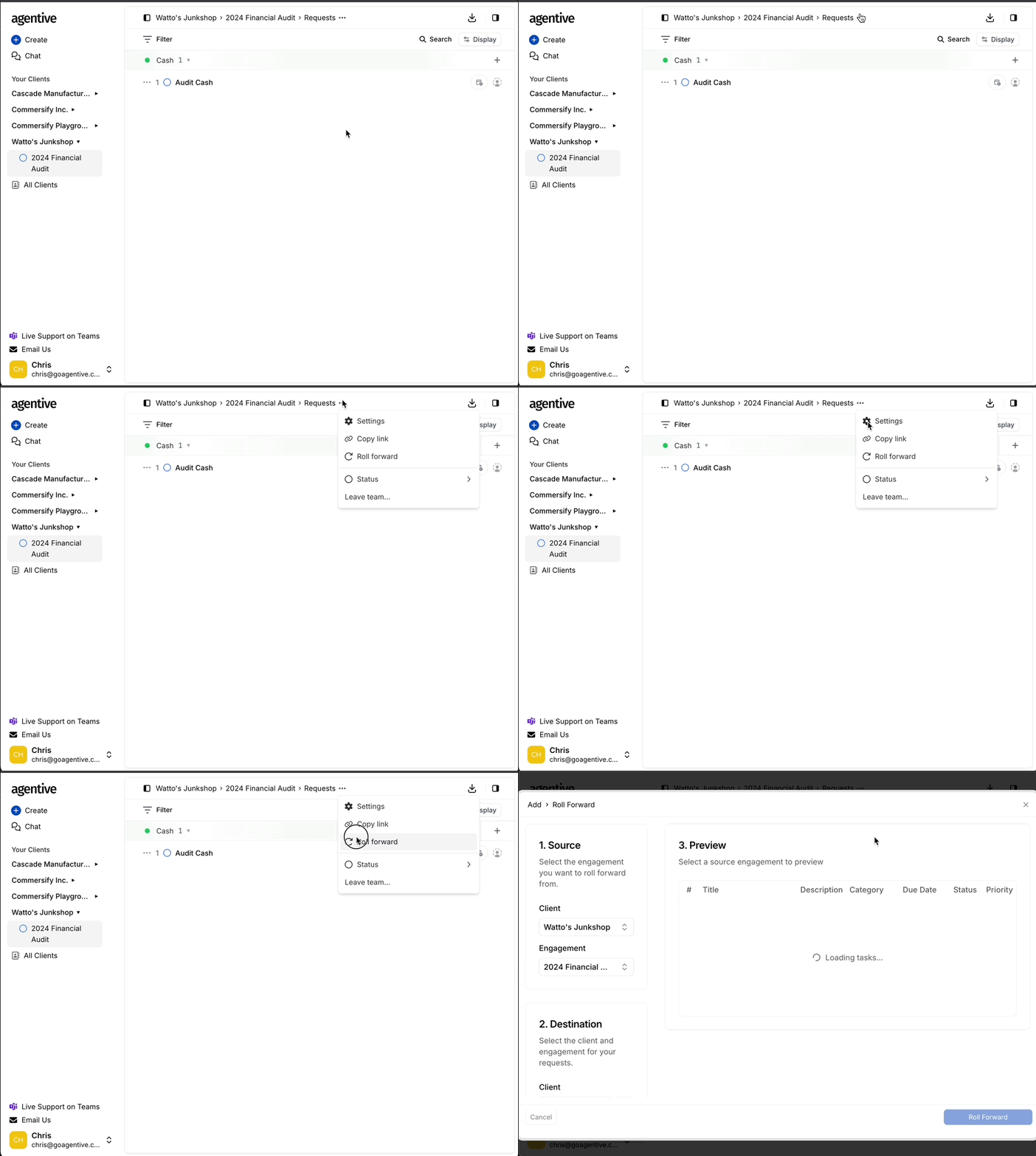
Locate engagement options
- Find the navigation bar at the top displaying Client Name and Engagement
- Click the icon
- Select Roll Forward from the dropdown
Opens roll forward dialog
The roll forward configuration screen appears with source engagement pre-selected.
This method is fastest when you're already working within the engagement you want to roll forward.
Method 2: Global add menu
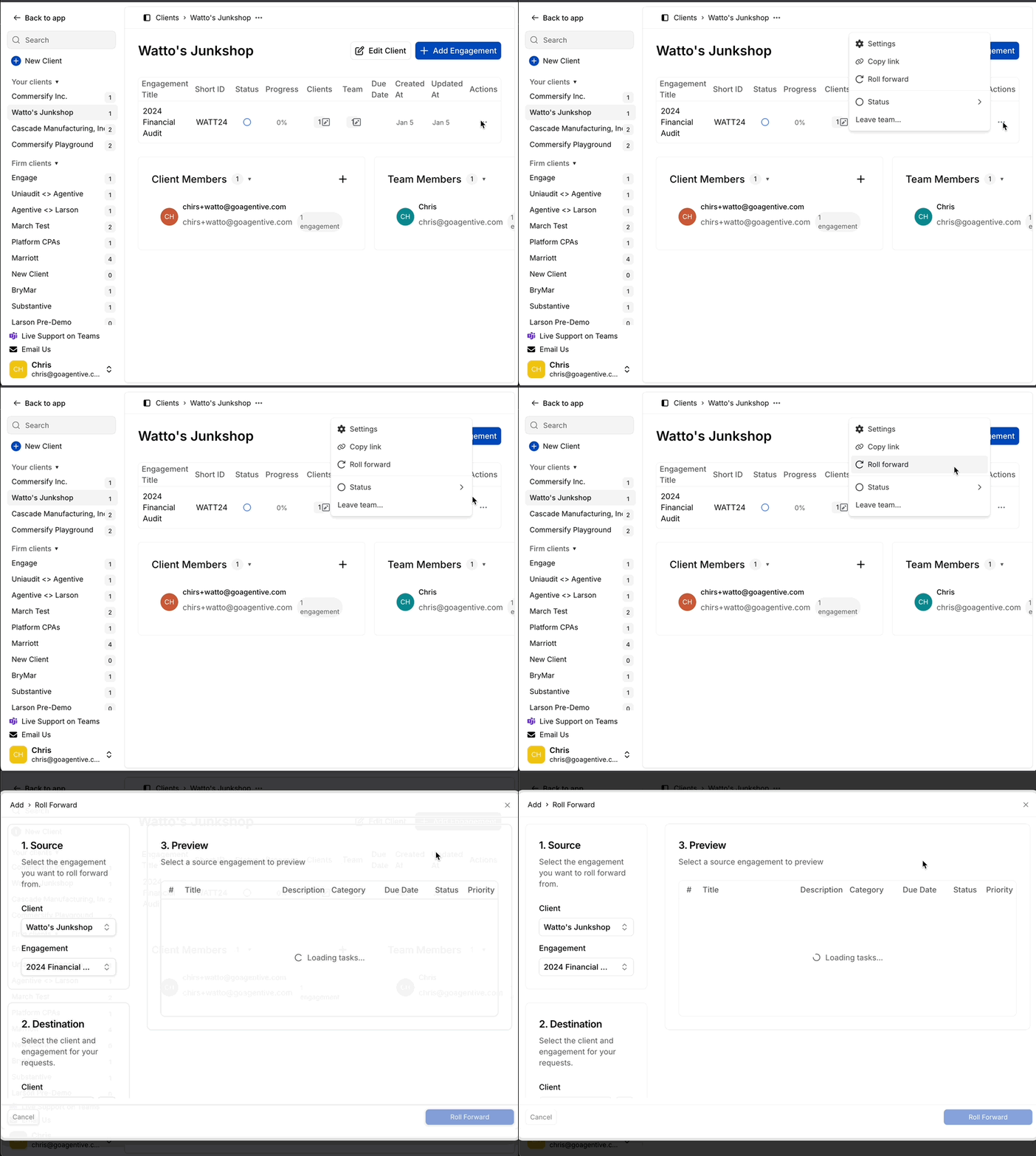
Open global actions
- Navigate to the + icon to the right of the firm's logo
- Select Roll Forward an Engagement from the list
Select source engagement
Choose which engagement to roll forward from the dropdown list.
Use this method when starting fresh or rolling forward from a different engagement than the one currently open.
Configure Rollforward
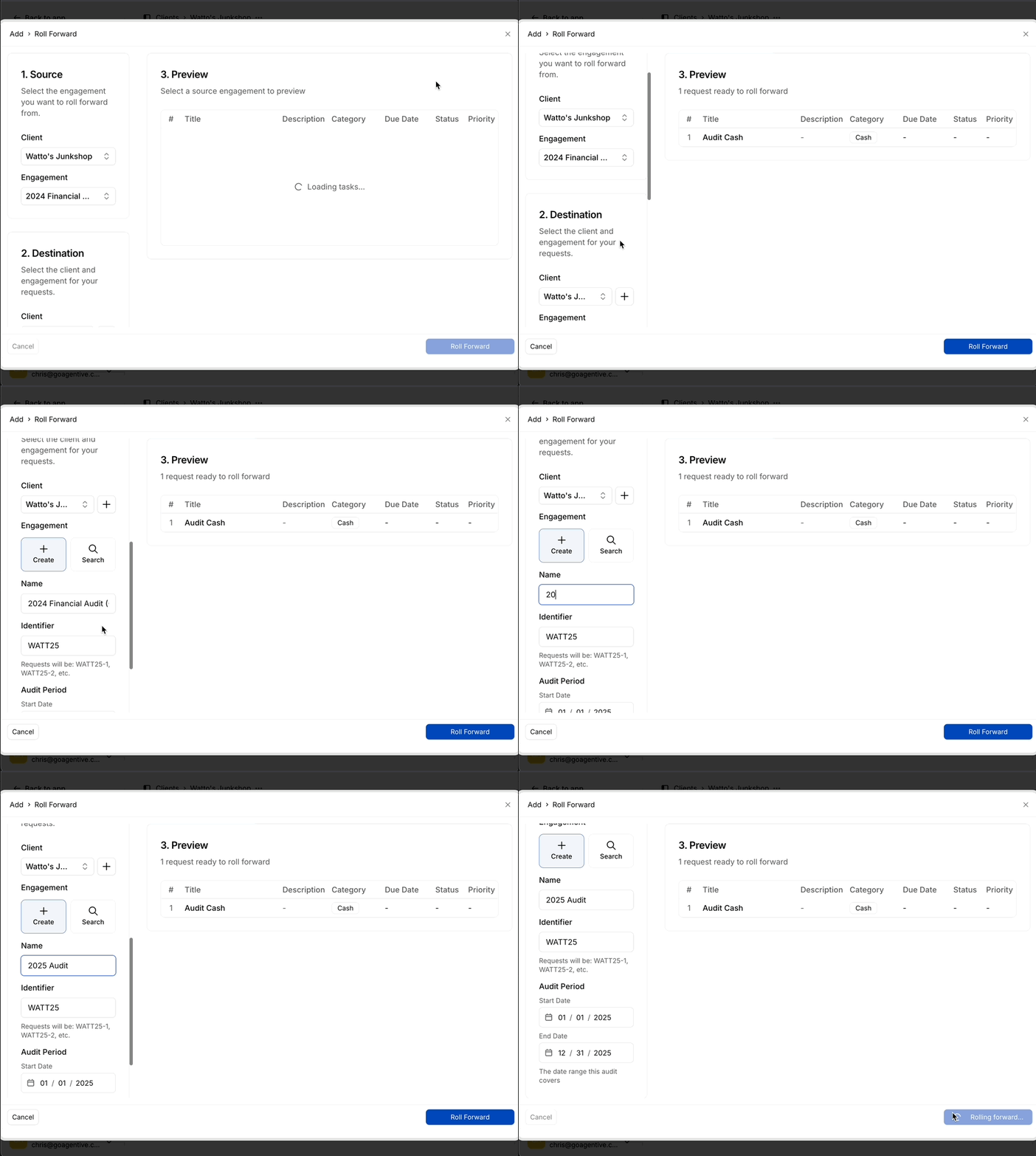
Review source engagement
Confirm the selected Client and Engagement under the Source section.
Roll forward the engagement before completing the archive process or deleting the current audit. Archived engagements can still be rolled forward.
Select destination client
Under the Destination section, select the target Client from the dropdown menu.
Same client
Roll forward to the same client for recurring annual audits or periodic reviews.
Different client
Roll forward to a similar client to use as a jumping-off point for similar workflows.
Rolling forward to a different client is useful for standardizing procedures across similar engagements.
Define engagement identity
- Enter the new engagement Name (e.g.,
Financial Statement Audit 2026) - Enter the Identifier (short code that prefixes all request numbers)
The identifier must be unique within the destination client. The system suggests one based on the pattern from the source.
Set audit period
Click the Calendar icons under Audit Period to define:
- Start date – When the new audit period begins
- End date – When the new audit period ends
The audit period helps date-sensitive automations and formulas calculate correctly for the new engagement.
Preview and create
Review preview pane
The Preview section shows:
- Number of requests being copied
- Number of categories being copied
- Number of workflows and automations being copied
- Team member assignments (if any)
Team member assignments are NOT copied by default. You'll need to re-assign auditors and client contacts in the new engagement.
Roll Forward the Engagement
Click to roll forward the engagement with all copied elements.
The system creates the new engagement and opens it automatically. You can start configuring immediately.
What rolls forward
Elements copied in roll forward
Engagement structure
- Categories
- Custom variables
- Status workflow settings
- Board configurations
Requests and tasks
- All request titles and descriptions
- Request properties (priority, category, etc.)
- Internal tasks
- Request workflows
Workpaper templates
- Table structures
- Document group configurations
- AI prompt definitions
- Formula columns
- Matching rules
Automation settings
- Validation rules
- Deep Analysis questions
- Custom column definitions
All structural and configuration elements copy over, giving you a complete framework to start the new engagement.
Elements NOT copied
Historical data
- Uploaded documents
- File attachments
- Supporting evidence
- Previous year workpapers
Activity and comments
- Request comments and discussions
- Activity history
- Status change logs
- Audit trail
Team assignments
- Auditor assignments
- Client contact assignments
- Lead roles
Execution results
- AI prompt responses
- Formula calculation results
- Document matching results
- Validation outcomes
Historical data remains in the source engagement for compliance and reference. You start with a clean slate for new evidence.
Continue your journey
← Updating engagement settings
Configure team, client, categories, and variables before rolling forward.
Co-Audit →
Use the natural-language agent in every request to build workflows from one instruction.
How is this guide?
Updating engagement settings
A tour of every tab in Engagement Settings (Overview, Team, Client, Task Types, Categories, and Variables), plus how to delete an engagement when it's done.
Co-Audit
Co-Audit is the natural-language agent that lives in the left sidebar of every request. Describe what you want and it builds the workflow, document groups, columns, and client-facing request copy for you.