Prior Year Consistency
Compares the current- and prior-year financial statements line by line and flags differences. Reconciles line items that were reordered, relabeled, or split between periods so a moved line is still matched correctly.
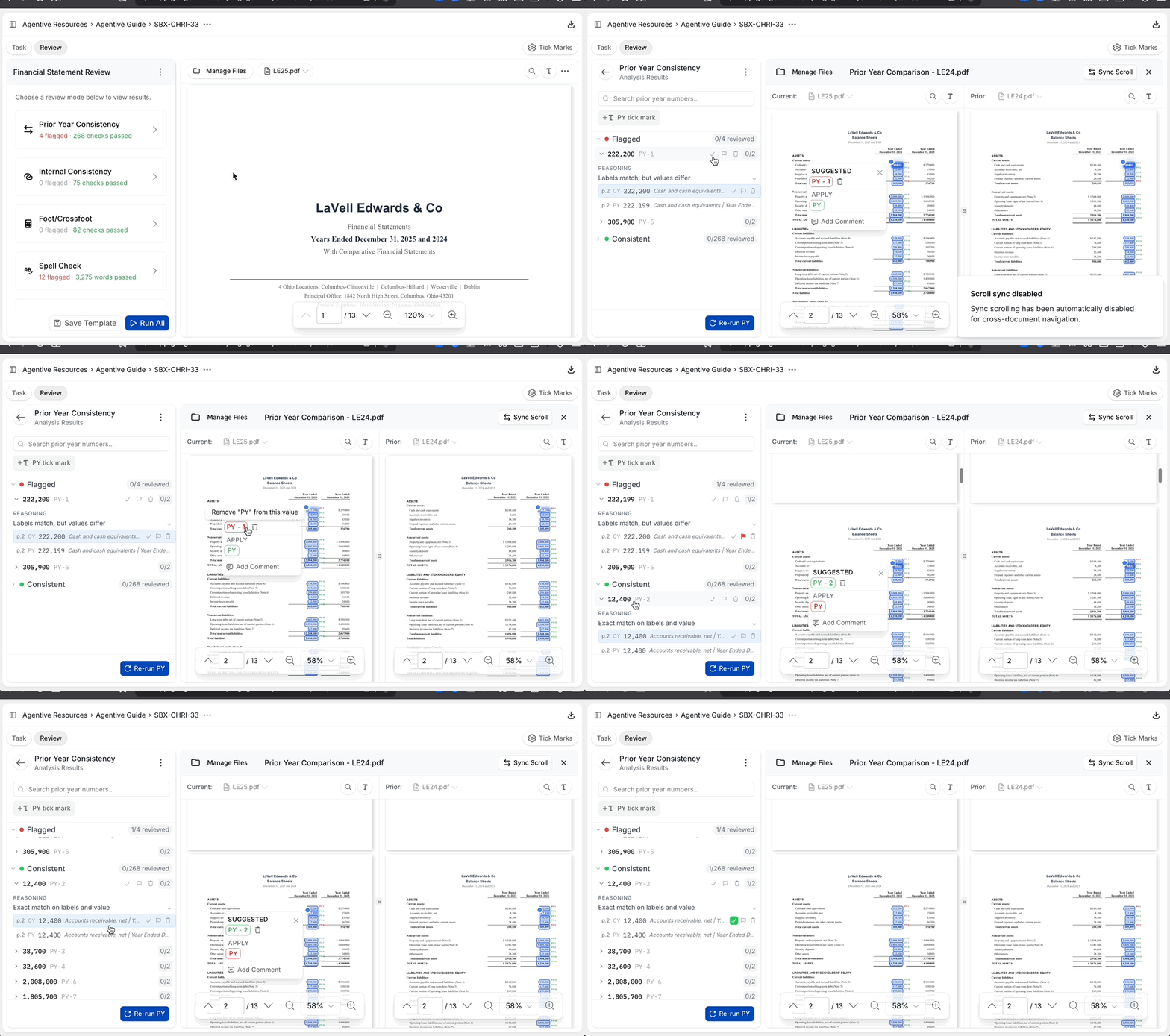
Prior Year Consistency is the FSR mode that reads the current- and prior-year financial statements side by side and flags every place the numbers don't match. It's the first mode most auditors walk on a fresh FSR because it surfaces the most obvious class of finding: a value that changed between the signed prior year and the current draft when it shouldn't have.
What makes the mode useful is how it handles change. Line items get reordered, relabeled, split, and combined between years. Prior Year Consistency aligns the line items by meaning, not by row position, so a line that moved from the middle of operating expenses to the bottom of the section is still matched to itself.
What it inspects
Direct numeric variances
Same line item, different number. The most common finding: a 22,200 in the current year against a 22,199 in the prior year on the same line.
Re-ordered line items
A line that moved between sections or rows. Matched by label and meaning, not position.
Relabeled line items
A line whose label changed between years (e.g., Other Income, Net → Other Income (Expense), Net). Reconciled when the underlying meaning is the same.
Split or combined lines
A prior-year line that was broken into two current-year lines, or vice versa. Flagged for review so the auditor can confirm the breakdown is intentional.
Section-level differences
Subtotals, totals, and section headers compared across years to catch a structural change to the statement.
Prior Year Consistency pairs well with Internal Consistency: one catches drift across periods while the other catches drift within the current draft. The overview at Financial Statement Review shows how the five modes fit together.
Continue your journey
← Financial Statement Review overview
See how the five review modes fit together.
Internal Consistency →
Detect when the same figure disagrees in more than one place in the current-year statement.
How is this guide?
Financial Statement Review
The Financial Statement Review (FSR) task runs five review modes against the prior- and current-year financial statements (Prior Year Consistency, Internal Consistency, Footing and Cross-Footing, Spell Check, and Disclosure Checklist) and surfaces every finding with a citation back to the source.
Internal Consistency
Detects when the same number appears with a different value in more than one place within the current-year statement, including subtotals that disagree with footnote references, schedules that don't tie to the face of the statement, and figures repeated inconsistently across the document.